

Specialised Hip Replacement Rehabilitation in Perth | Murdoch Square | Subiaco
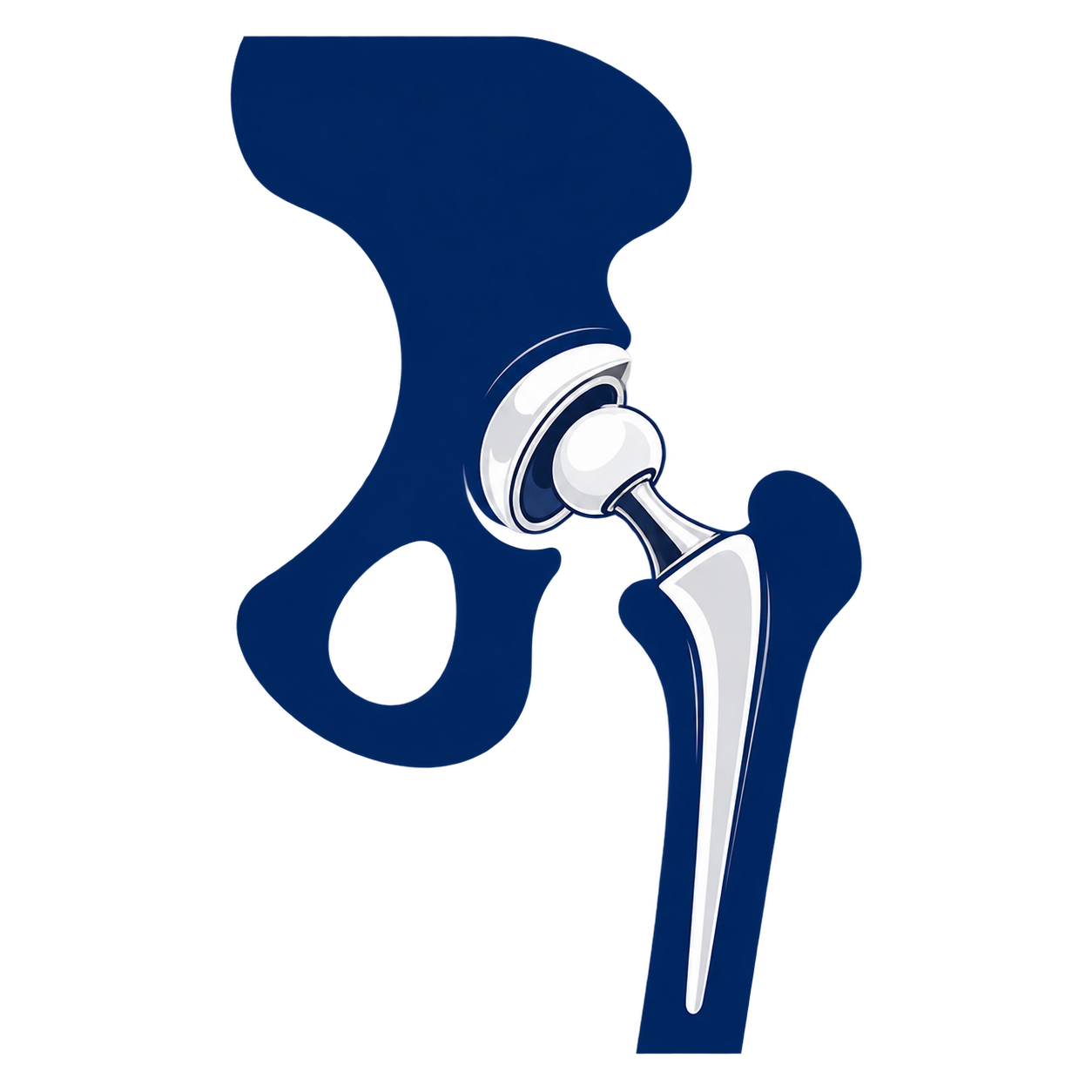
Cardiomotion Rehabilitation provides individualised pre- and post-operative hip replacement rehabilitation in Perth for people undergoing total hip replacement, with services available at Murdoch Square and Subiaco.
Rehabilitation Doesn't End When You Can Walk Again
Why Is Rehabilitation Important After Total Hip Replacement?
Whatever the reason for your hip replacement, surgery alone does not immediately restore full strength or physical function. Rehabilitation in the months following surgery plays an important role in rebuilding mobility, lower-limb strength and physical capacity, particularly for people wanting to return to exercise and higher-level activities.
A total hip replacement can significantly reduce pain and improve mobility. However, the muscle mass, strength and physical capacity lost before and after surgery may take considerably longer to recover.
Early rehabilitation focuses on restoring hip movement, walking ability and everyday function. As your recovery progresses, rehabilitation transitions towards progressive strength and conditioning, including resistance training to rebuild muscle mass, lower limb strength and physical capacity.
Research supports progressive resistance training following total hip replacement, with studies demonstrating improvements in muscular strength and physical function.
Long-term rehabilitation is particularly important for people wanting to return to more demanding activities, including recreational exercise, gym training, physically demanding work and sport.
Our approach is to progressively develop your strength and physical capacity throughout recovery, while helping you establish a structured exercise program that you can continue independently over the longer term.
Our Hip Replacement Rehabilitation Structure
Initial Consultation
1 hour
Whether you're preparing for a total hip replacement or have recently undergone surgery, your initial consultation is an opportunity for us to understand your condition, discuss your recovery and establish a suitable starting point for rehabilitation.
We'll review your medical history, surgical procedure, any precautions provided by your surgeon, current symptoms and rehabilitation goals.
Your assessment will include an evaluation of your hip mobility, lower limb strength, walking ability and functional capacity, with testing adapted to your stage of recovery.
Following your assessment, we'll develop an individualised rehabilitation program, discuss what exercises are appropriate for you and establish a plan for progressively rebuilding your strength, mobility and physical function.
What to Bring
Medicare card and private health insurance details
Relevant medical history and surgical reports, if available
Any rehabilitation instructions or precautions provided by your surgeon
A current list of medications
Comfortable clothing suitable for physical assessment
Please allow 45–60 minutes for your initial consultation.
Locations
Murdoch Square
Subiaco
Subsequent Consultation
30 Minutes
Our follow-up consultations are tailored to your stage of recovery, whether you've recently undergone hip replacement surgery or have progressed to more advanced rehabilitation.
During early recovery, consultations focus on managing swelling, restoring hip mobility and gradually increasing your tolerance to exercise. We'll provide you with a structured home exercise program and guidance on managing symptoms, progressing your exercises and increasing your daily activity.
During later rehabilitation, consultations focus on progressively rebuilding strength and physical capacity. If you're already exercising independently at home or at your own gym, we'll review your progress, adjust your training loads and help you prepare for more demanding activities.
Rehabilitation programs are delivered in structured training blocks, with periodic consultations to assess your progress, address any difficulties and make appropriate adjustments to your exercise program.
Locations
Murdoch Square
Subiaco
Subsequent Rehabilitation session
45 Minutes
Our 1:1 rehabilitation sessions provide supervised exercise tailored to your stage of recovery, current physical capacity and rehabilitation goals.
During early rehabilitation, sessions focus on restoring hip mobility, improving lower limb strength and gradually increasing your tolerance to exercise. We'll also introduce exercises you can perform independently at home to support your recovery between appointments.
As your recovery progresses, rehabilitation transitions towards more advanced strength and conditioning, with progressively increased training loads and aerobic exercise. For individuals who are ready for higher loading, sessions can progress from home-based exercises to gym-based strength training.
Throughout rehabilitation, we'll guide your exercise technique, monitor your progress and adjust your program as you work towards returning to everyday activities, exercise and higher-level physical demands.
Locations
Murdoch Square: Early-stage rehabilitation and exercise instruction
Subiaco: Supervised rehabilitation and gym-based strength and conditioning
Frequently asked questions about a total hip replacement
-
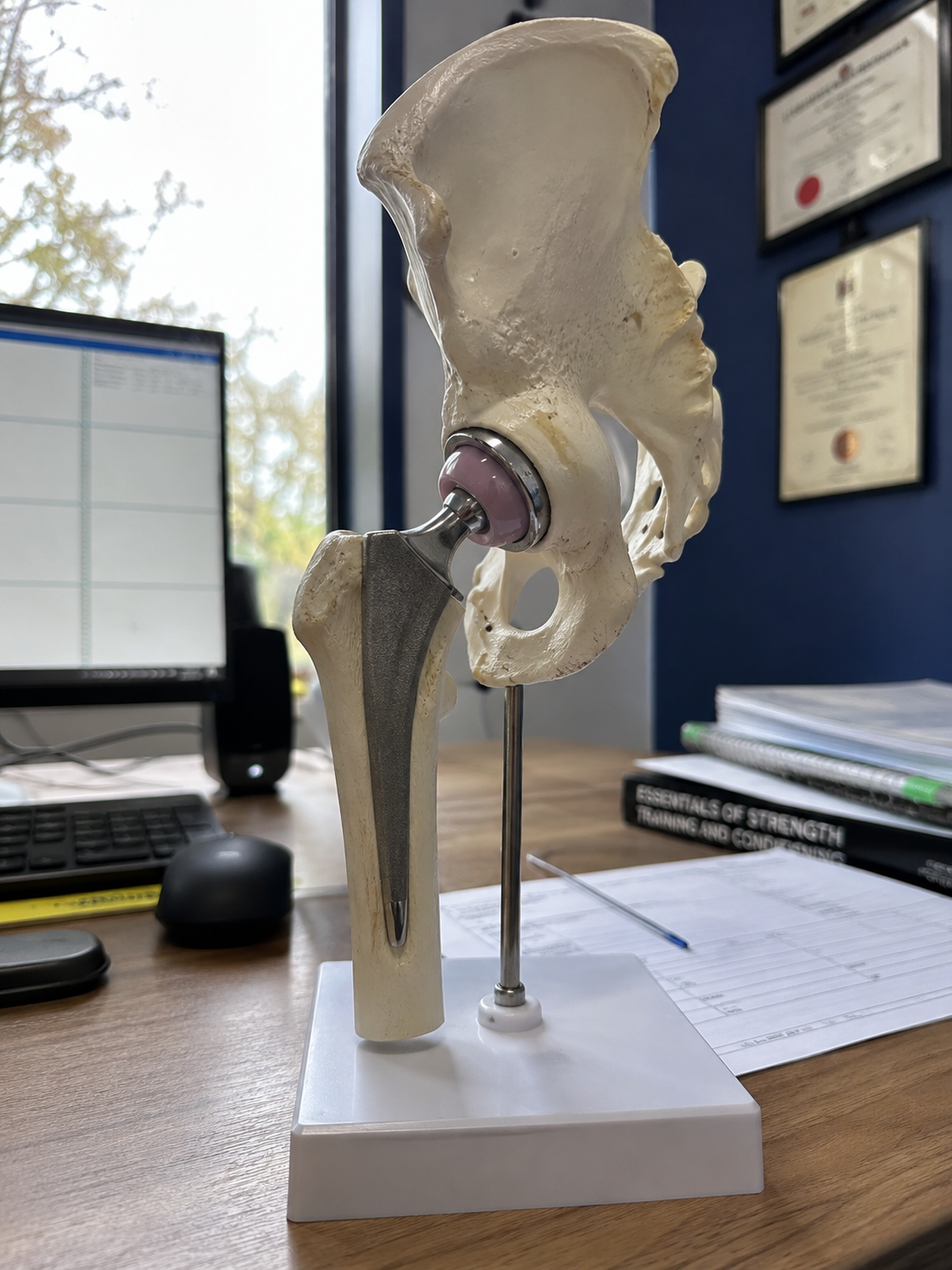
During a total hip replacement, the damaged femoral head is removed and replaced with a metal stem inserted into the femur with a new ball at the top. The damaged surface of the acetabulum, or hip socket, is also prepared and replaced with a new socket and liner. Together, these components create a new ball-and-socket joint designed to restore movement and reduce pain from the damaged joint surfaces.
Partial Knee Replacement (PKR)
A partial knee replacement is used when the arthritis or joint damage is limited to one compartment of the knee. Only the damaged section is resurfaced and replaced with metal and plastic components, while the healthy compartments of the knee are preserved. Because less of the joint is replaced, more of your natural bone and ligament structures can usually be retained. -
The hip is surrounded by a strong joint capsule, ligaments, muscles and tendons that contribute to stability and movement. During surgery, some of these tissues need to be opened, moved or repaired to access the hip joint. Exactly which structures are affected depends on the surgical approach used. These tissues then need time to heal following surgery, which is one reason early rehabilitation and movement precautions can differ between patients.
-
Initially, yes. Your surgeon may place temporary restrictions on certain hip positions while the surrounding tissues heal and the risk of dislocation is higher. These precautions depend on the surgical approach and are commonly relaxed as recovery progresses. Longer term, most people return to normal daily activities and many forms of exercise, although some surgeons recommend avoiding repetitive high-impact activities.
Some individuals may report discomfort with certain exercises and may need modifications or alternatives.
-
Walking is an important part of recovery, but walking alone does not necessarily restore the strength and physical capacity lost before and after surgery. Progressive strength and conditioning helps rebuild the muscles around the hip and lower limb, improve balance and mobility, and increase your capacity for stairs, lifting, longer walks, exercise and other higher-level activities. Even the AAOS specifically notes that walking is not a substitute for prescribed strengthening exercise following hip replacement.
-
Recovery following a hip replacement occurs progressively over several months. Many people return to light daily activities within approximately 6 weeks and most normal activities around 3 months, but improvements in strength, function and physical capacity can continue well beyond this. For some people, it can take up to 12 months to experience the full benefit of their hip replacement.
Have a Question About Your Hip Replacement?
Submit the form below to discuss your rehabilitation before or after total hip replacement.
Every person's surgery, recovery and goals are different. Whether you're preparing for surgery, in the early stages of recovery, or looking to rebuild your strength and return to higher levels of activity, we can help guide your rehabilitation and exercise progression.