

Knee Replacement Rehabilitation in Perth, Murdoch Square | Subiaco
Cardiomotion Rehabilitation provides individualised pre- and post-operative knee replacement rehabilitation in Perth for people undergoing total knee replacement (TKR) or partial knee replacement (PKR), with services available at Murdoch Square and Subiaco.
While knee replacement surgery can reduce pain and improve joint function, rebuilding your strength, mobility and physical capacity takes time. A structured rehabilitation program helps you manage the early stages of recovery before progressing towards more advanced strength and conditioning.
At Cardiomotion Rehabilitation, we'll work with you throughout your recovery, progressively developing the strength and physical capacity needed for everyday activities, exercise and the activities you want to return to.
Rehabilitation Doesn't End at 12 Weeks
12 weeks vs >12 months
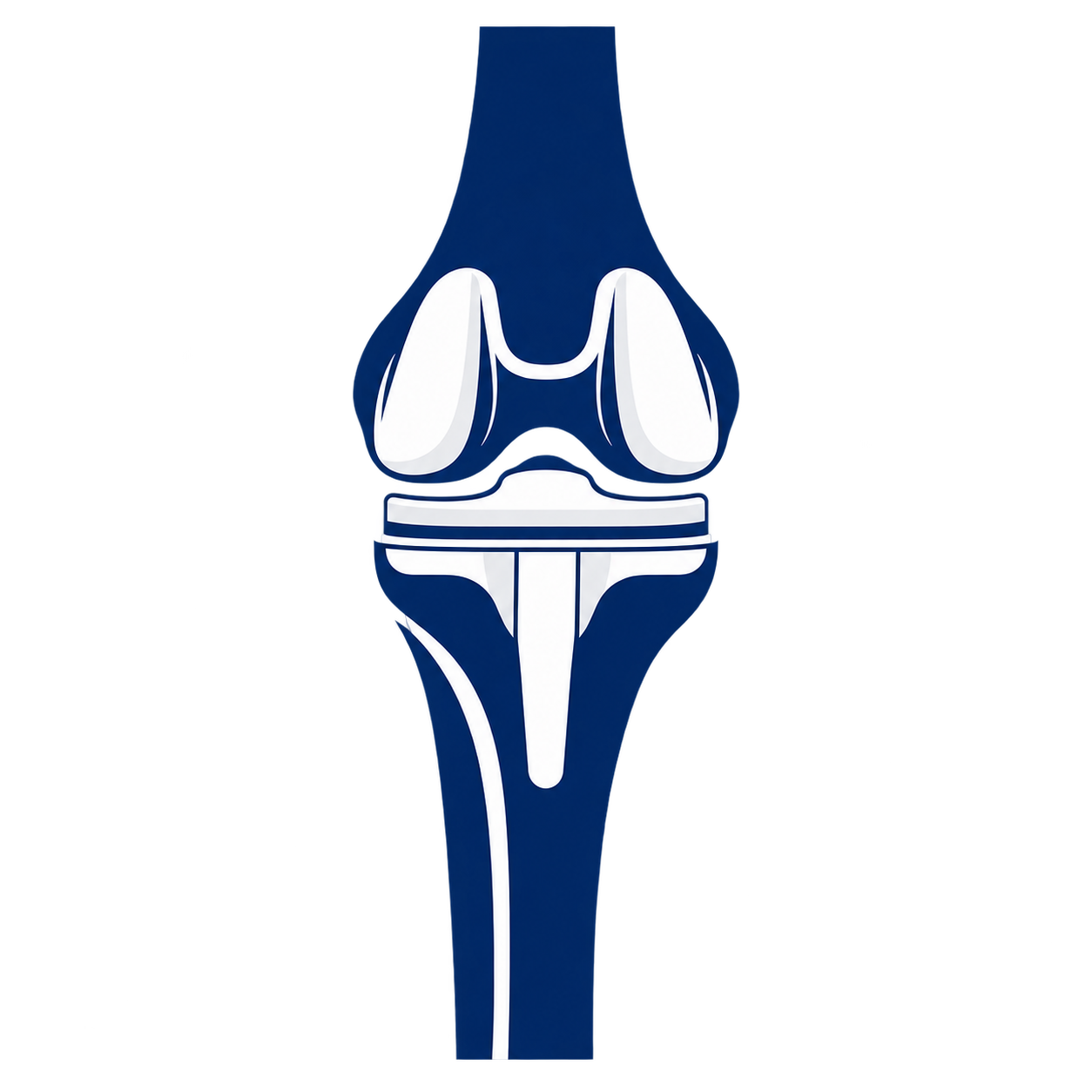
Recovery from a total knee replacement is not decided in the operating theatre. It is decided by what happens in the months of rehabilitation afterward. Research pooling 15 studies and over 1,100 knee replacement patients found that exercise programs continued well beyond the first 12 weeks led to significantly greater gains in strength and knee flexibility than programs that stopped early. Short-term programs mainly helped people get back to daily tasks faster, but it was the ones who stayed the course toward a year out who ended up with the stronger, more mobile knee and more tolerant to higher loading. Commitment to the full process, not just the first few weeks, is what determines the result. And that commitment does not stop once rehabilitation ends. Ongoing exercise, strength and resistance training, and adopting a healthy and active lifestyle remain the foundation for keeping that knee strong and capable for the long term.
Our Knee Replacement Rehabilitation Structure
Initial Consultation
1 hour
Whether you're preparing for knee replacement surgery or have recently undergone surgery, your initial consultation is an opportunity for us to understand your condition, discuss any concerns and establish a suitable starting point for rehabilitation.
We'll review your medical history, surgical procedure, current symptoms and any rehabilitation instructions provided by your surgeon. Your assessment will also include an evaluation of your knee mobility, lower limb strength, walking ability and functional capacity, with testing adapted to your stage of recovery.
We'll discuss what to expect throughout rehabilitation, the challenges you may encounter and the physical milestones we'll use to guide your progress.
Following your assessment, we'll develop an individualised rehabilitation program based on your current physical capacity, stage of recovery and personal goals.
What to Bring
Medicare card and private health insurance details
Relevant medical history and information about your knee surgery, if available
Any rehabilitation instructions provided by your surgeon
A current list of medications
Comfortable clothing suitable for physical assessment
Please allow 60 minutes for your initial consultation.
Locations
Murdoch Square
Subiaco
Subsequent Consultation
30 Minutes
Our follow-up consultations are tailored to your stage of recovery, whether you've recently undergone knee replacement surgery or have progressed to more advanced rehabilitation.
During early recovery, consultations focus on managing swelling, restoring knee movement and gradually increasing your tolerance to exercise. We'll provide you with a structured home exercise program and guidance on managing symptoms, improving your range of motion and progressing your daily activities.
During later rehabilitation, consultations focus on progressively rebuilding strength and physical capacity. If you're already exercising independently at home or at your own gym, we'll review your progress, adjust your training loads and help you prepare for more demanding activities.
Rehabilitation programs are delivered in structured training blocks, with periodic consultations to assess your progress, address any difficulties and adjust your exercise program as you recover.
Locations
Murdoch Square
Subiaco
Subsequent Rehabilitation session
45 Minutes
Our 1:1 rehabilitation sessions provide supervised exercise tailored to your stage of recovery, current physical capacity and rehabilitation goals.
During early rehabilitation, sessions focus on restoring knee mobility, rebuilding lower limb strength and gradually increasing your tolerance to exercise. We'll also introduce exercises you can perform independently at home to support your recovery between appointments.
As your recovery progresses, rehabilitation transitions towards more advanced strength and conditioning, with progressively increased training loads and aerobic exercise. For individuals who are ready for higher loading, sessions can progress from home-based exercises to gym-based strength training.
Throughout rehabilitation, we'll guide your exercise technique, monitor your progress and adjust your program as you work towards returning to everyday activities, exercise and higher-level physical demands.
Locations
Murdoch Square: Early-stage rehabilitation and exercise instruction
Subiaco: Supervised rehabilitation and gym-based strength and conditioning
Frequently Asked Questions About Knee Replacement
-
Total Knee Replacement (TKR)
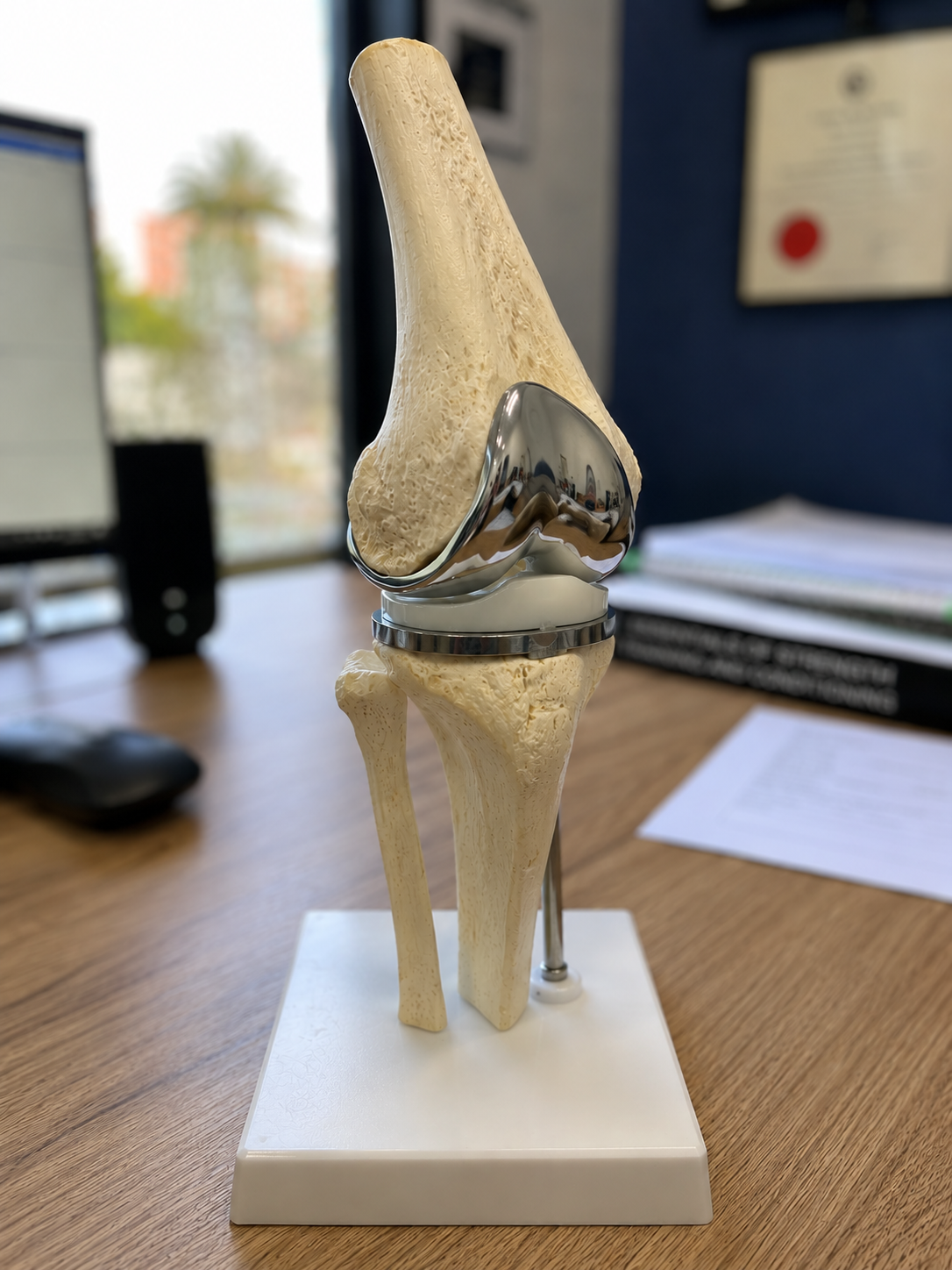
During a total knee replacement, the damaged joint surfaces at the end of the femur and top of the tibia are removed and reshaped. These surfaces are replaced with metal components, with a durable plastic spacer positioned between them to allow the knee to move smoothly. The underside of the kneecap may also be resurfaced depending on the procedure. The aim is to replace the damaged weight-bearing surfaces while restoring alignment and movement of the knee.Partial Knee Replacement (PKR)
A partial knee replacement is used when the arthritis or joint damage is limited to one compartment of the knee. Only the damaged section is resurfaced and replaced with metal and plastic components, while the healthy compartments of the knee are preserved. Because less of the joint is replaced, more of your natural bone and ligament structures can usually be retained. -
The major ligaments of the knee are treated differently during a total knee replacement.
Collateral ligaments
The medial and lateral collateral ligaments are generally preserved during surgery. They are important for side-to-side stability of the knee, and surgeons take care to protect them throughout the procedure.Anterior Cruciate Ligament (ACL)
The ACL is generally removed during a total knee replacement. In many people undergoing knee replacement, the ACL is already significantly degenerated, torn or absent as a result of longstanding osteoarthritis. Modern knee replacement implants are designed to provide stability without relying on the ACL.Posterior Cruciate Ligament (PCL)
The PCL may either be preserved or removed, depending on the type of knee replacement, implant design and the surgeon's preferred technique. Some implants are designed to retain and work with the PCL, while others replace its stabilising function through the design of the prosthesis.So although the joint surfaces and some ligament structures change during a knee replacement, the implant and remaining soft tissues work together to provide a stable, functional knee.
-
Clicking or clunking from a knee replacement can be completely normal, particularly during bending the knee past 90 degrees and straightening of the knee.
Some total knee replacements use a posterior-stabilised prosthesis, particularly when the PCL has been removed. These implants use specially designed metal and plastic components to provide stability that would otherwise be assisted by the PCL. As the knee bends, particularly into deeper ranges of flexion, these components can make contact and produce an audible or noticeable click.
Clicking can also occur as tendons and other soft tissues move across the components of the knee replacement. As a result, a painless click that occurs during movement does not necessarily indicate that anything is wrong with the replacement.
However, clicking should be assessed if it is new or worsening and accompanied by pain, excessive or increasing swelling, changes in skin colour or redness, unusual warmth, fever, or a sudden change in how the knee functions. If these occur, contact your surgeon or healthcare provider for assessment.
-
Yes this is normal.
Stiffness after sitting for a period of time is common following a knee replacement, particularly during the earlier stages of recovery.
Following a knee replacement, the bone and surrounding soft tissues have undergone significant surgical trauma and need time to heal. This includes the joint capsule, synovium, connective tissues and the tissues involved in the surgical approach. The normal inflammatory response to this tissue injury increases fluid within and around the knee, contributing to swelling, stiffness and that familiar feeling of tightness after sitting
When the knee remains still for a period of time, this swelling and joint irritation can make the knee feel tight or stiff when you first stand up and begin moving again. It will often start to loosen as you walk and move the knee.
Joint swelling can also contribute to arthrogenic muscle inhibition, where signals from the irritated and swollen knee temporarily reduce the nervous system's ability to fully activate the quadriceps which results in tightness
This is one reason rebuilding quadriceps strength and gradually restoring normal movement are important parts of rehabilitation after knee replacement.
-
The initial goal of rehabilitation is to regain function in your knee. This includes managing swelling and stiffness, restoring knee movement, improving your walking gait, rebuilding muscle strength and gradually returning to normal activities of daily living.
As your knee recovers, rehabilitation should progress into a structured strength and conditioning program focused on progressively increasing strength, physical capacity and tolerance to load.
Long-term strength and conditioning is an important part of recovery following knee replacement. Building strength and physical capacity helps reduce ongoing functional limitations and prepares you for higher-level activities such as longer periods of walking, stairs, recreational exercise and other activities you want to return to.
Have a Question About Your Knee Replacement?
Submit the form below to discuss your rehabilitation before or after total knee replacement.
Every person's surgery, recovery, and goals are different. Whether you're preparing for surgery, working through the early stages of recovery, or looking to rebuild your strength, mobility, and confidence, we can help guide your rehabilitation and progression back to the activities that matter to you.